
How do porta potties work?
Underneath the seat sits a holding tank, sized around 60 to 70 gallons on a standard unit. Waste drops into the tank and mixes with a blue liquid deodorizer that suppresses smell and starts breaking down solids between services. There's no flush handle here, no line running out to a sewer. When the tank fills, a service truck arrives, vacuums it out through a hose, rinses it, and refills the chemical reservoir. ANSI/PSAI Z4.3, the portable sanitation industry's own service standard, sets a baseline of one visit per week for up to 10 users across a 40 hour week, though busy Albany job sites often need more frequent stops. A standard unit runs about 44 by 48 inches on the ground and stands roughly 92 inches tall, small enough to tuck near a fence line without eating into staging space. If you're comparing what a week or a month actually costs before you commit, the porta potty rental cost page breaks that down further.
How do flushable porta potties work?
A deluxe flushable unit adds a small freshwater reservoir and a foot pump or handle that pushes a rinse of water through the bowl after each use, instead of leaving waste sitting exposed until the next flush. The tank underneath still holds everything until a service truck pumps it, same as a standard unit, but the flush cuts odor and keeps the bowl cleaner between visits. These run higher than a standard unit and make sense for weddings, office trailers, or any event where guests expect something closer to a home bathroom. Pair one with a portable sink rental nearby and you've covered both ends of hygiene without running a water line. For long events, check the restroom trailer rental options too, since a trailer with multiple stalls handles bigger crowds better than a single flushable unit.
How does a portable sink work?
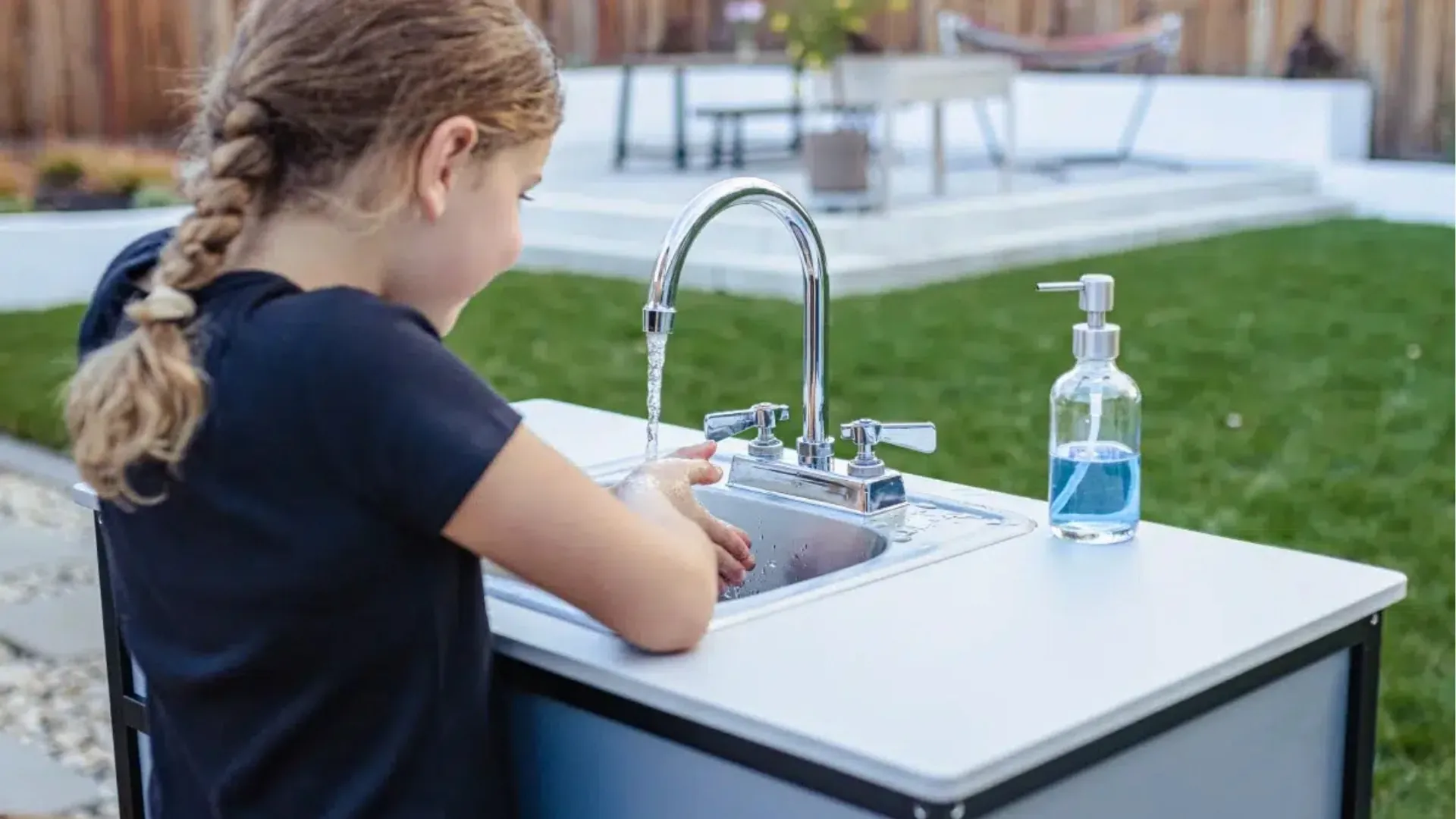
A portable sink carries its own fresh water in a built-in tank, usually pumped by foot pedal or hand crank, and drains into a separate gray water tank underneath rather than into a sewer line. Fill it, use it, and a service tech empties the gray tank and refills fresh water on the same schedule as your toilets. 29 CFR 1910.141(d)(2) requires washing facilities to have soap and towels or a hand-drying device, since hand sanitizer alone doesn't satisfy that rule, and most handwashing station rental units are built with that in mind. On a construction site, a crew member finishing work with paint, coatings, herbicides, or insecticides needs real washing access under OSHA 1926.51(f)(1), not just a squirt of sanitizer clipped to a fence post. If you're scoping requirements before bidding a job, handwashing requirements lays out what a site actually needs.
What happens when a septic tank gets pumped?
A vacuum truck arrives, opens the tank's access port, and pulls out the liquid and settled solids with a hose, same basic principle as emptying a porta potty tank but at residential scale. A typical residential septic tank needs pumping every 3 to 5 years, depending on tank size and how many people live in the house. Some homeowners ask about septic tank cleaning chemicals to stretch that interval, but chemical additives aren't a substitute for physical pumping once solids build up. A grease interceptor works on a different trigger: it gets pumped once fats, oils, grease, and solids reach 25 percent of the liquid depth, which is why restaurants schedule grease trap pumping far more often than a house schedules septic service. If you're not sure where your Albany property stands, how often to pump a septic tank walks through the signs, and septic tank warning signs covers what backup and slow drains usually mean.
On a job site, a construction worker running to a porta potty during a break needs that unit close, clean, and stocked, which is part of why OSHA 1926.51(c) sets toilet counts by crew size: one facility for 20 workers or fewer, then additional seats as headcount climbs past 20 and again past 200. Camping trips work the same mechanically as a job site unit, just smaller crowds and often shorter rental windows, and camping porta potty covers what a weekend trip actually needs. For an Albany event pulling from Troy, 11.5 miles northeast, or Bethlehem, 8.3 miles south, event restroom rental and how many porta potties do I need both help with headcount math before you order.
How often does a porta potty get serviced?
Most Albany rentals get serviced weekly under the ANSI/PSAI Z4.3 baseline, but high-traffic construction sites or multi-day events often need two or three visits a week. How often are porta potties cleaned covers the tiers in more detail.
Do porta potties smell bad?
A well-maintained unit shouldn't smell strong. The blue chemical suppresses odor between services, and placement matters too, since a unit baking in direct sun all day will smell worse. See do porta potties smell for placement tips.
Can I get a porta potty for a single weekend?
Yes. Weekend rates run higher than a full weekday rate since the turnaround is faster for the crew, but plenty of Albany weddings and backyard parties book exactly this way through request a quote.
How much does porta potty rental cost per day?
Daily standard unit rates in Albany fall in a range you can see broken down on porta potty rental per day, with delivery and service fees added separately depending on the job.
Are porta potties ADA accessible?
Some are. Accessible units meet ADA Standards 213.2, which requires at least 5 percent of a cluster to be accessible units, with a 60 inch turning circle inside per ADA Standards 304.3.1. Details are on ADA accessible porta potty.
Next step
Get a delivery date
Tell us the address, the dates and the headcount. We size the order and confirm the route.